WellborePAS-1000
StimMax PAS-1000
Treats specific precipitation obstructions: asphaltenes, paraffins and scale within the wellbore.
[Data sheet and SDS PDF] Request a quote →

Patent-pending non-conventional solutions that preserve well integrity. Bio-derived, readily biodegradable nano-scale mixtures formulated to replace traditional acidic and solvent chemical stimulation methods.
StimMax breaks and dissolves high molecular weight organic matter such as paraffin, asphaltene, scale, mud cake, emulsion and retrograde condensation, from open-hole perforations and from sandstone and carbonate reservoir formations. The products can be customized to specific geological and geographical needs.
By definition, well stimulation is a well intervention performed on an oil or gas well to increase production by improving the flow of hydrocarbons from the drainage area into the wellbore.
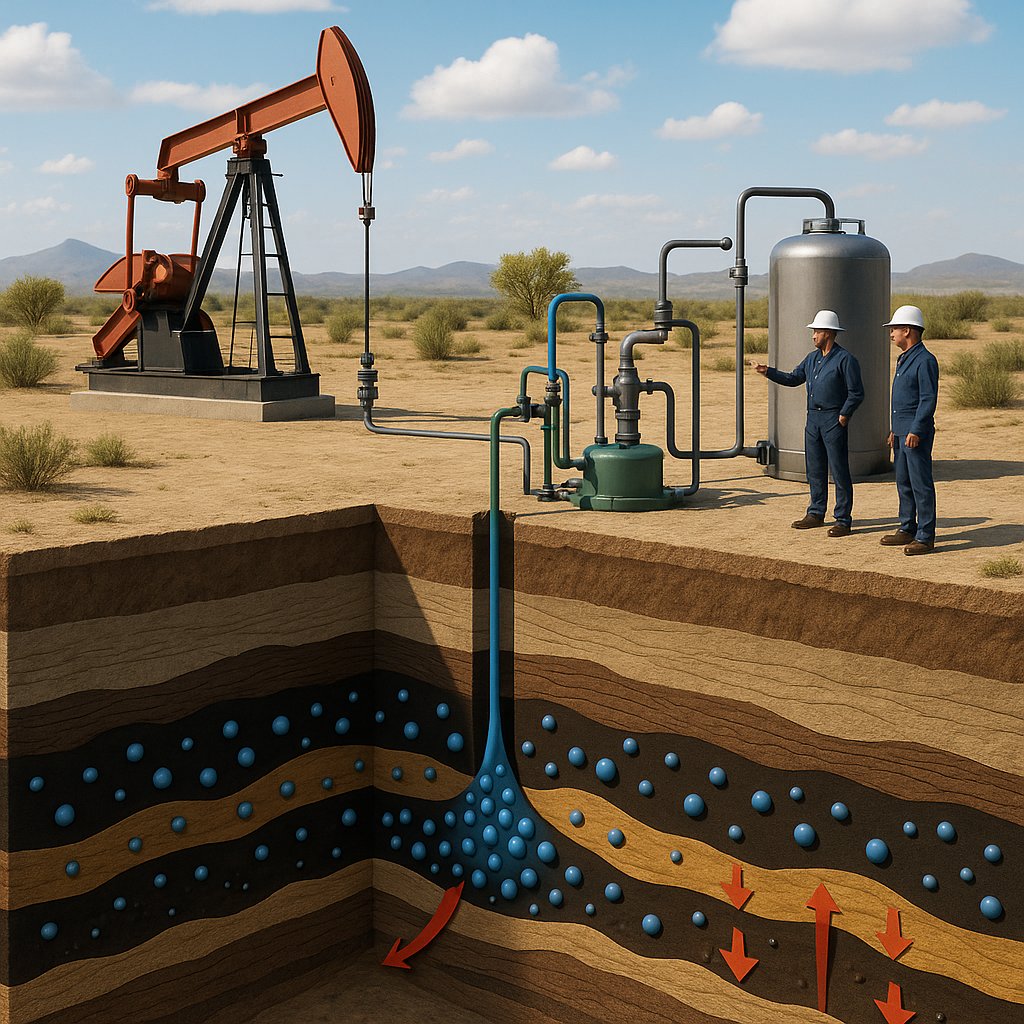
Treats specific precipitation obstructions: asphaltenes, paraffins and scale within the wellbore.
[Data sheet and SDS PDF] Request a quote →
An organic conditioner used to prewash and prepare the wellbore perforations and reservoirs for well stimulation treatments.
[Data sheet and SDS PDF] Request a quote →
New patented biodegradable viscosity reducer. Using less than 1% of the volume of naphtha, it gives better results in blending heavy crudes, increasing from 8 API to over 16 API without precipitation.
[Data sheet and SDS PDF] Request a quote →
Well stimulation product for retrograde condensation and condensate ring obstructions.
[Data sheet and SDS PDF] Request a quote →
Well stimulation product to repair and restore sandstone reservoirs after obstructions and post-completion formation damage.
[Data sheet and SDS PDF] Request a quote →
Well stimulation product to repair and restore carbonate and limestone reservoirs after obstructions and post-completion formation damage.
[Data sheet and SDS PDF] Request a quote →
Product names and descriptions are taken from the current site. [Add product photos, data sheets and SDS]
StimMax is pumped into the well by a pump truck, followed by pumped brine water so the nanoparticles penetrate deep into the formation and dissolve obstructions caused by organic material such as paraffins (wax), asphaltenes and carbonates (salts), both in the operating pipes and in the formation pores, reducing them to a liquid form for easy disposal.
The detailed step-by-step procedure is on a private site made available to operating partners. [Confirm access wording]
Biodegradable, non-toxic and non-corrosive solvent/surfactant made from a proprietary blend of bio-derived products.
No special handling, containers, transportation or storage. Zero VOC fumes, and it does not pollute underground aquifers.
Penetrates deeper and lasts about 90 days, versus 30 days with currently used acid chemicals.
Stimulations made 4 times per year versus 12 with acid chemicals, saving 15 to 35 days of shutdown per year.
Performance figures are company-reported, from nanotechoil.com. [Add independent source or test report links]
Selected company-reported onshore wells (2017 to 2019, Venezuelan joint-venture fields) and one offshore North Sea platform.
Source: company-reported field data from the current nanotechoil.com. The original site names the operators; they are left out here until Nanotech confirms what may be published. [Confirm figures and permission to name operators; the source lists well 220-33-60 peak as both 750 and 775 bpd]
An offshore platform from a major Norwegian oil company producing close to 50,000 barrels per day had severe paraffin crystallization within the tubing. Production had fallen to 50% (25,000 bpd) and traditional caustic solvents could not be used. With two StimMax stimulations 10 days apart, using four times the amount of product due to the size of the platform, production increased from 25,000 bpd to 47,650 bpd. PAS-1000 was recommended as part of the operator's monthly well intervention and maintenance program.
In a September 2023 pilot with Petrolera Monterrico in Lot XV, well 12053 went from 4 BOPD before stimulation to 28 BOPD on the first day, averaging 8 BOPD over three months. Read the pilot summary →
The Orinoco Belt of Venezuela holds one of the world's largest reserves of extra-heavy crude oil, much of it difficult and expensive to produce because of its viscosity. Nanotech describes a nanotechnology-based biodegradable process that reduces viscosity at the wellhead, taking heavy crude from approximately 8 to 9 API to transportable levels of 16 to 17 API, using modular, truck-based logistics instead of imported diluents and heated pipelines.
Every well is different. Our technical team prepares a report on the product, formulation, number of stimulations per year and estimated additional oil.